‘Arbitrary, Intimidating’: DU teachers protest mandatory Aadhaar-based biometric attendance for salaries
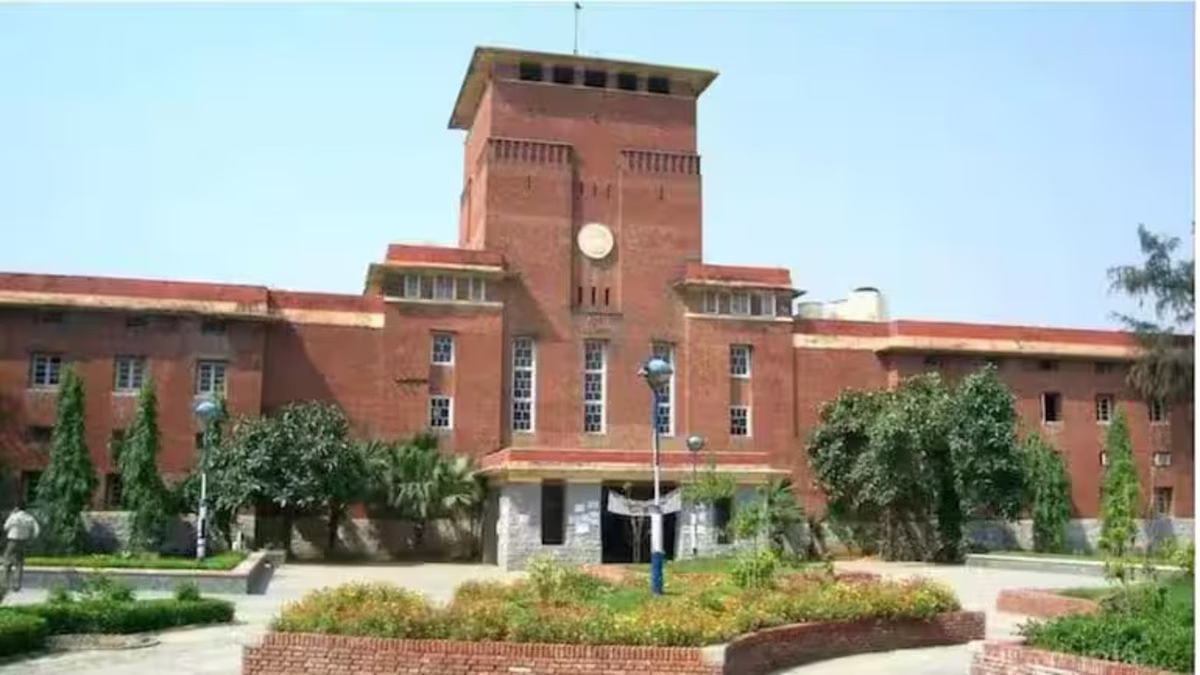
Teachers of University of Delhi have objected to the mandatory implementation of an Aadhaar-Based Biometric Attendance System (AEBAS) and the associated warning that salaries could be withheld for non-compliance from January 2026 onwards.
In a letter to the Delhi University VC, members of the Academic for Action and Development Teachers' Association (AADTA) along with representatives of statutory bodies, described the mandate as coercive and damaging to academic autonomy.
The AADTA letter comes in the wake of a recent university communication that directed all employees to mark attendance through the Aadhaar-linked biometric system. Deans, heads of departments and officers have also been instructed to ensure compliance to avoid disciplinary action.
DU teachers call biometric system arbitrary
Calling the measure “arbitrary” and “intimidating”, the teachers said the linkage of attendance with salary undermines the dignity of the profession.
“Salary is a legitimate right earned through service and cannot be withheld as a punitive measure,” the letter states, adding that the directive has created “widespread anxiety and unrest among teachers.”
The teachers pointed out that faculty attendance and accountability are already governed by University Grants Commission (UGC) regulations, university ordinances and established academic norms.
“Teaching, research, examinations, fieldwork, extension activities and academic responsibilities cannot be reduced to biometric marking,” the association said.
They also flagged a contradiction between earlier assurances and the present directive.
“While teachers were informed that the proposal to impose biometric attendance had been dropped, the continued enforcement of administrative instructions clearly contradicts (the) claim,” the letter said.
Biometric Attendance: AADTA objections
Another objection raised by AADTA was the university referring to colleges as “units”. “Colleges of the University of Delhi are statutory academic institutions and cannot be administratively reduced to generic units,” the teachers wrote, describing the terminology as an erosion of institutional autonomy.
The association further criticised the manner in which the decision has been implemented, stating that imposing such measures through executive instructions amounts to “governance by diktat rather than democratic deliberation.”
According to the teachers, any proposal affecting service conditions must be discussed through statutory bodies and meaningful consultation.
AADTA has demanded immediate withdrawal of the biometric attendance requirement, an assurance that no salary will be withheld on this basis, and the initiation of constructive dialogue.