DTU opens geospatial science and technology department; focus on GIS, GeoAI and spatial analytics
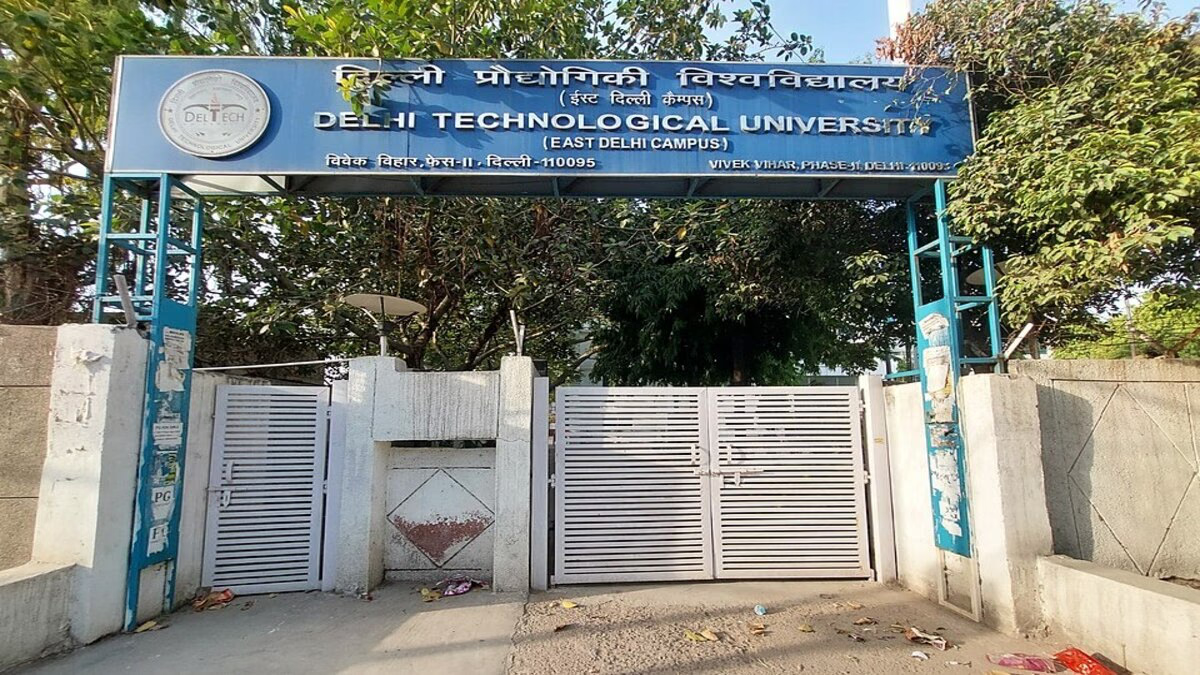
Delhi Technological University (DTU) has announced the commencement of its Department of Geospatial Science and Technology, bringing under one academic unit its work in geospatial studies, spatial data analytics, mapping technologies and related digital applications.
The department will focus on geospatial science, remote sensing, GIS, spatial analytics and their intersections with artificial intelligence and digital infrastructure.
As stated in the DTU press note, the department, which had been functioning in different forms over the past few years, was introduced in its present structure during a programme attended by officials from the department of science and technology and IN-SPACe.
Addressing the gathering, Abhay Karandikar, secretary, department of science and technology, spoke on the increasing relevance of geospatial data in future technological systems. Referring to developments in artificial intelligence, he said future AI models are expected to depend substantially on geospatial attributes and spatially linked datasets. He also pointed to emerging areas such as GeoAI and the spatial internet as domains requiring focused academic and research engagement, the press note said.
DTU: Geospatial research, skilling push expands
DTU said in a press note that vice chancellor Prateek Sharma noted that geospatial technologies now extend beyond traditional cartography and have applications in urban planning, environmental monitoring, infrastructure development and public policy. He stated that the department would work towards integrating geospatial intelligence with other digital technologies to support applied research and data-driven problem solving.
Providing the background of the initiative, K. C. Tiwari, founder head of the department, said the unit began in 2019 as a centre of excellence under the department of civil engineering, later functioned as an independent centre from 2022, and has now been organised as a multidisciplinary department. The academic structure will include teaching, research projects and skill-based training aligned with measurable educational outcomes.
As per the DTU press note Vinod Kumar, director (Promotions) at IN-SPACe, also addressed the programme and discussed current efforts to expand geospatial and space-sector training in the country. He referred to the “Space Policy 2023” and outlined capacity-building programmes intended to address skill shortages in these sectors.
research,jobs and more — delivered to your inbox every morning.