IIT Delhi launches first programme at Sonipat campus; PG Diploma in Solar Systems and Management classes start
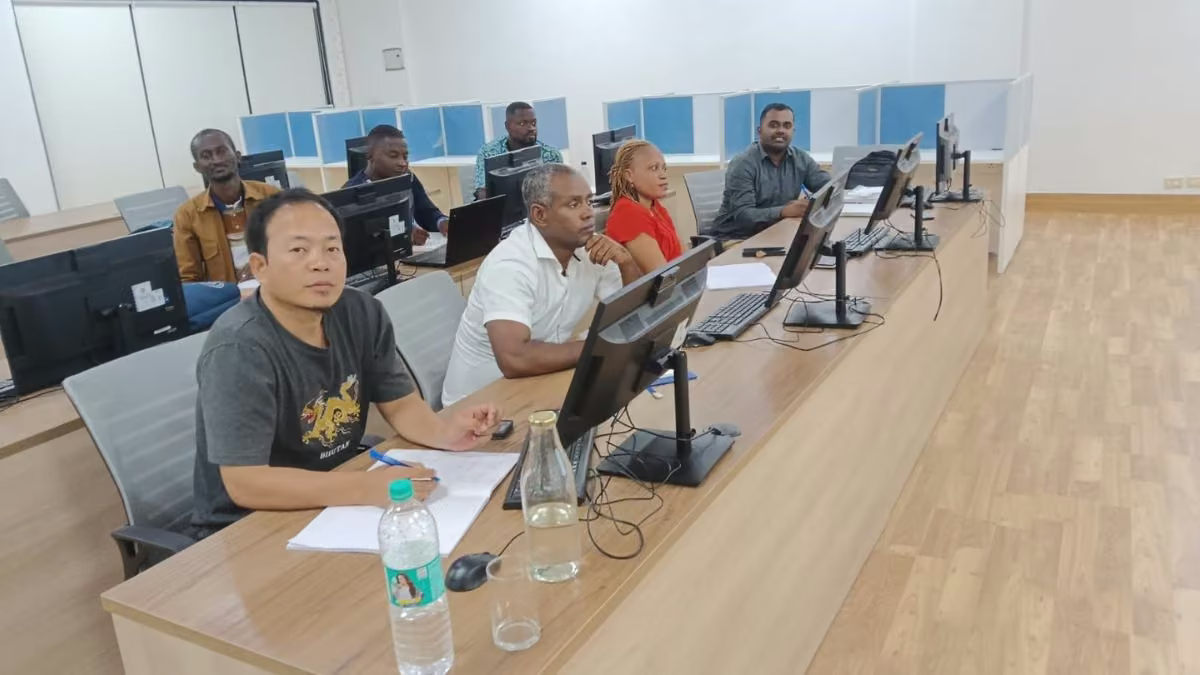
The Indian Institute of Technology (IIT) Delhi, in collaboration with the International Solar Alliance (ISA) and INES (Institut National de l’Energie Solaire) France, has introduced its first academic course, ‘Postgraduate Diploma in Solar Systems and Management’ at its Sonipat campus. The launch information was announced in a press release shared by IIT Delhi.
The first batch of the one-year programme started on September 3, 2026. The inaugural batch includes nine international fellows from eight countries. The programme is offered by IIT Delhi’s Department of Energy Science and Engineering (DESE). The ISA-nominated fellows from eight countries will get training from academicians and industry experts.
Discussing the purpose of the new PG Diploma programme, Ramesh Narayanan, head of the Department of Energy Science and Engineering (DESE), IIT Delhi, said, “With this initiative, IIT Delhi has moved to the global forefront of energy education and management. The programme will train international participants from over 120 ISA countries as trainers in STAR-C in ISA member countries.”
IIT Delhi-ISA programme to support solar energy skills
STAR-C centres will help ISA member countries grow their skills, infrastructure and innovation ecosystem for using solar energy. This will in turn help in sustainable economic growth. The partnership will support renewable energy with skill development, educational collaboration and training professionals in ISA member countries.
While speaking about the launch, Somnath Baidya Roy, Professor-in-Charge, IIT Delhi Sonipat campus, said, “This is a milestone as the first teaching programme with physical classes at the Sonipat campus of the Institute. We are planning more such programmes in the coming years.”
The United Nations Industrial Development Organization (UNIDO) is funding the postgraduate diploma programme. Fellows who complete the course will go through a one-month internship in Europe based on applied solar technologies. After completion, they can work with Solar Technology Application Resource Centres (STAR-C) in their home countries.