IIT Madras, Saint-Gobain India collaborate to advance sustainable construction research
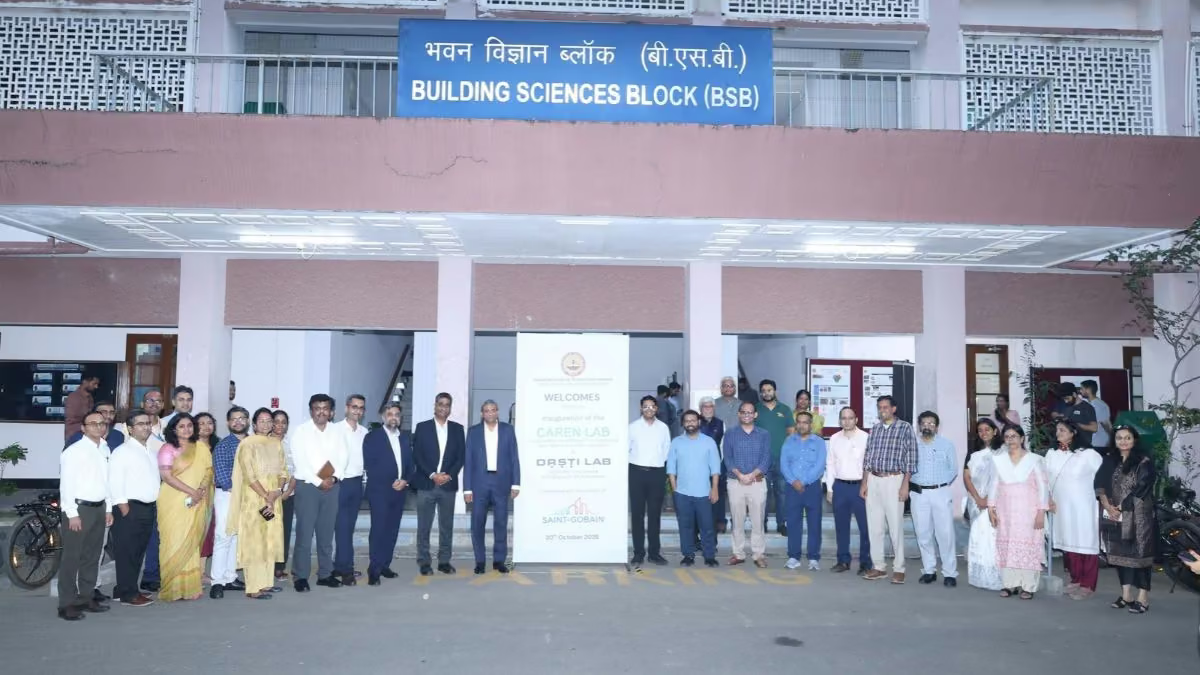
Saint-Gobain India has partnered with Indian Institute of Technology Madras (IIT) Madras to establish two state-of-the-art research laboratories for scaling up research in sustainable construction materials and digital technologies under a grant of Rs 3.8 crore over three years. The partnership aims to find real-world answers to problems within India’s construction industry.
Two research laboratories will be established in the Centre of Excellence on Technologies for Low-carbon and Lean Construction at IIT Madras through the partnership. The initiative will focus on improving material efficiency, structural durability, construction productivity and uptake of low carbon technologies.
The partnership will also combine academic research and industry expertise to develop technologies for India’s infrastructure needs, including solutions suited to the hot and humid climate of the country.
Sustainable construction in focus
IIT Madras Director V Kamakoti said that the partnership will strengthen the institute’s research capabilities on sustainable infrastructure and construction materials. He said the labs would support the creation of “next-generation construction materials and intelligent infrastructure technologies”.
Sreedhar N, CEO of Saint-Gobain for Asia Pacific and India, said that the collaboration will help to translate scientific research into practical applications for the construction industry He also added that the partnership would help advance research on “low-carbon materials, smart infrastructure and innovations for the built environment”. He also added that the step will advance the “adoption of light and sustainable construction in India”.
The two laboratories, digital real-time sensing technologies for infrastructure (DRSTI) and concrete admixture research for engineering next-gen construction (CAREN), were inaugurated at the IIT Madras campus on October 30.
The CAREN laboratory will focus on the development of sustainable construction materials, including research on alternatives to conventional Portland cement. The DRSTI laboratory will look at artificial intelligence, digital twins and real-time sensing for infrastructure monitoring, construction quality assessment and project management.