IIT Madras study finds educated professionals vulnerable to financial cyber crime under stress, fear
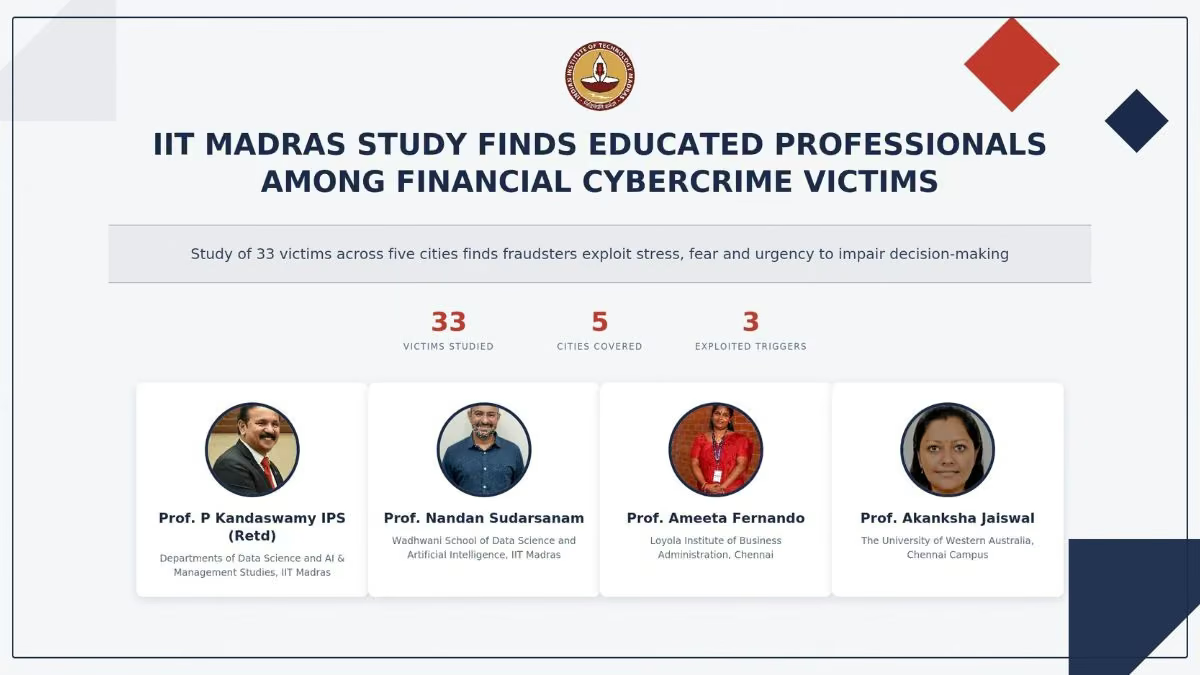
Researchers from the Indian Institute of Technology (IIT) Madras have found that financial cybercrime in India has affected highly educated and professionals with high digital literacy. The findings have challenged the common perception that people fall victim to online fraud only because they do not have digital awareness or are not careful with their money.
Based on interviews, 33 people who fell victim from Chennai, Bengaluru, Hyderabad, New Delhi and Mumbai were included in the research group. Out of 33, 22 men and 11 women, including 12 senior citizens, participated. IIT Madras interviews were held in English, Hindi and Tamil languages and were checked using the Gioia method.
The study found that victims mostly included information technology (IT) professionals, bankers, doctors, and management and finance professionals. Even people with public-sector employees and those with cybersecurity qualifications were a part of this study. The researchers said digital literacy cannot protect people from financial cybercrime.
Speaking on the findings, Nandan Sudarsanam, Wadhwani School of Data Science and Artificial Intelligence, IIT Madras, said, “Our findings show that financial cybercrime is not simply a problem of inadequate digital literacy. Even highly educated and digitally experienced individuals can become vulnerable when fraudsters exploit fear, stress, and urgency. Understanding these factors is essential to designing more effective prevention strategies.”
Also Read | IIT Madras plans to set up School of Medical Sciences, proposes MBBS, MD and PhD courses
Cyber fraud vulnerability
The researchers found that many people were targeted during periods of personal or professional stress, like illness in the family, retirement, job searches or pressure at work. To influence victims, fraudsters have used fear, urgency and financial issues.
Despite recognising warning signs, some victims described experiencing a state of mental pressure in which they continued following the instructions of fraudsters. The scam activities included investment and stock-trading fraud, task and job scams, digital payment fraud, malware and digital arrest. Fraudsters also used tricks involving Aadhaar, UPI transfers and fake investment platforms.
It was also reported that financial losses are between a few thousand rupees and more than Rs 1 crore. The study also found differences in how banks and cybercrime authorities responded to the complaints. While some victims got quick assistance, others faced delays.
Sharing his response on cybercrime must move beyond blaming victims. P Kandaswamy IPS (Retd), Adjunct Faculty, Department of Data Science and Artificial Intelligence, Department of Management Studies, IIT Madras said, “Banks and law-enforcement agencies need stronger systems for early detection, rapid intervention, and coordinated response, along with better support for victims.”