IIT Madras study highlights how AI could shape jobs across India
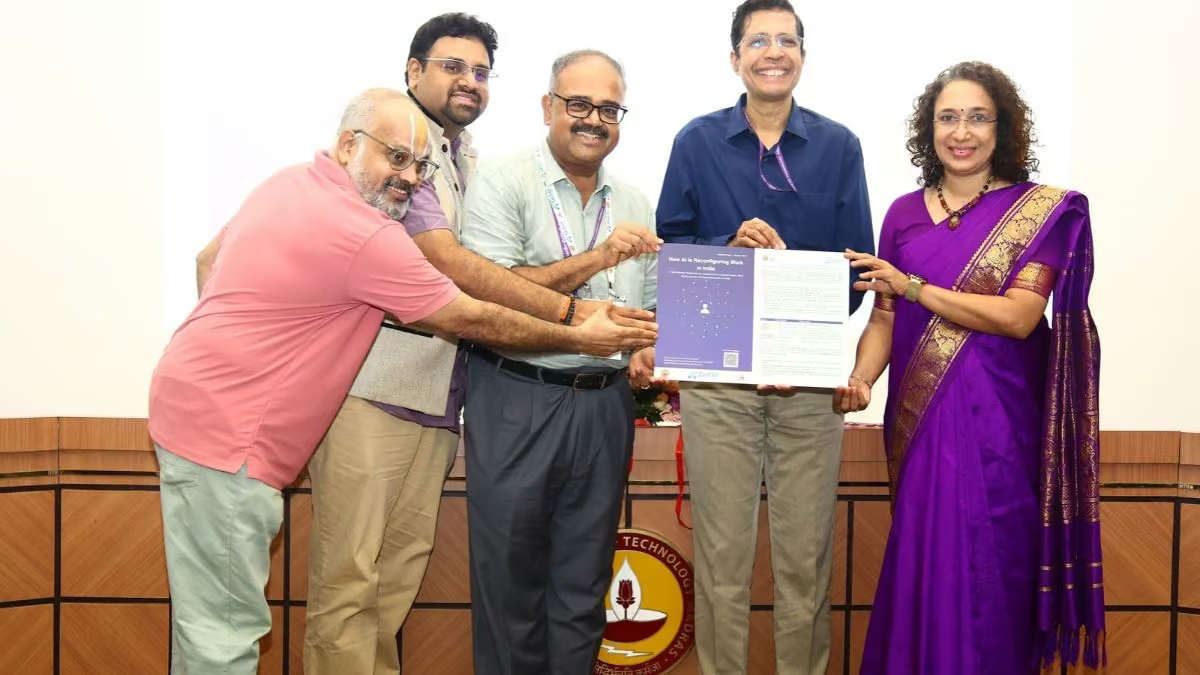
Researchers at the Indian Institute of Technology Madras (IIT) Madras have proposed to evaluate the impact of artificial intelligence (AI) on jobs in India. It should be examined depending on task level instead of looking at the entire job. A new whitepaper examines how AI can reshape existing jobs, assist workers, and create new ones.
This paper has been developed by the Centre for Responsible AI (CeRAI), an inter-disciplinary research group at the Wadhwani School of Data Science and Artificial Intelligence (WSAI), IIT Madras and was released at the Industry Conclave on AI Governance 2026.
Officials said that the impact of AI on jobs will depend on various factors like the cost of the technology, workplace practices, regulations and the skills of workers. The paper notes that AI’s impact could vary across workers, including new and experienced employees, formal and informal workers, and people in urban and rural areas.
Also read | TISS Literature Fest to explore the changing worlds of youth and storytelling
How AI could impact jobs
In a whitepaper titled ‘How AI Is Reconfiguring Work in India’ is a task-based framework to understand the augmentation, displacement, new roles and the changing structure of jobs, researchers differentiate between AI automating individual tasks and AI eliminating entire occupations.
CeRAI head Balaraman Ravindran explains the approach that most jobs have tasks and only a few of them can be done by AI. “The effect depends on the tasks, the industry, rules for AI and how much it costs to use AI,” he also added.
“Our framework separates four levels within the profession, the task, the job, the occupation and the wider labour-market outcome,” said research director Gokul S Krishnan. He also added that AI-driven changes could mean more productivity, new kinds of jobs or job losses depending on how organisations decide to reshape work.
The paper also introduces a notion of “AI-cost geography” and demonstrates how differences in the cost of technology and infrastructure could affect adoption. Affordable tools may trickle down to small business and business-process outsourcing. Advanced AI in legal services and medical imaging could stay in the bigger companies and cities.
Also read | India’s hunger score improves to 24.1, child wasting still a challenge
Suggestions for policies
The researchers recommend the usage of affordable AI tools that are task orientated, especially for small enterprises and India specific studies on skills and tasks impacted by AI.
They are also calling for studies to see which tasks can be done by AI and where using AI might risk the quality, and safety. This study might also help companies to decide how AI affects jobs. It is very important for companies to prepare their workers to use the proper skills and knowledge to use in each task as the AI is being used heavily.