IIT Roorkee, TRLM to empower 500 women weavers through design and skill development
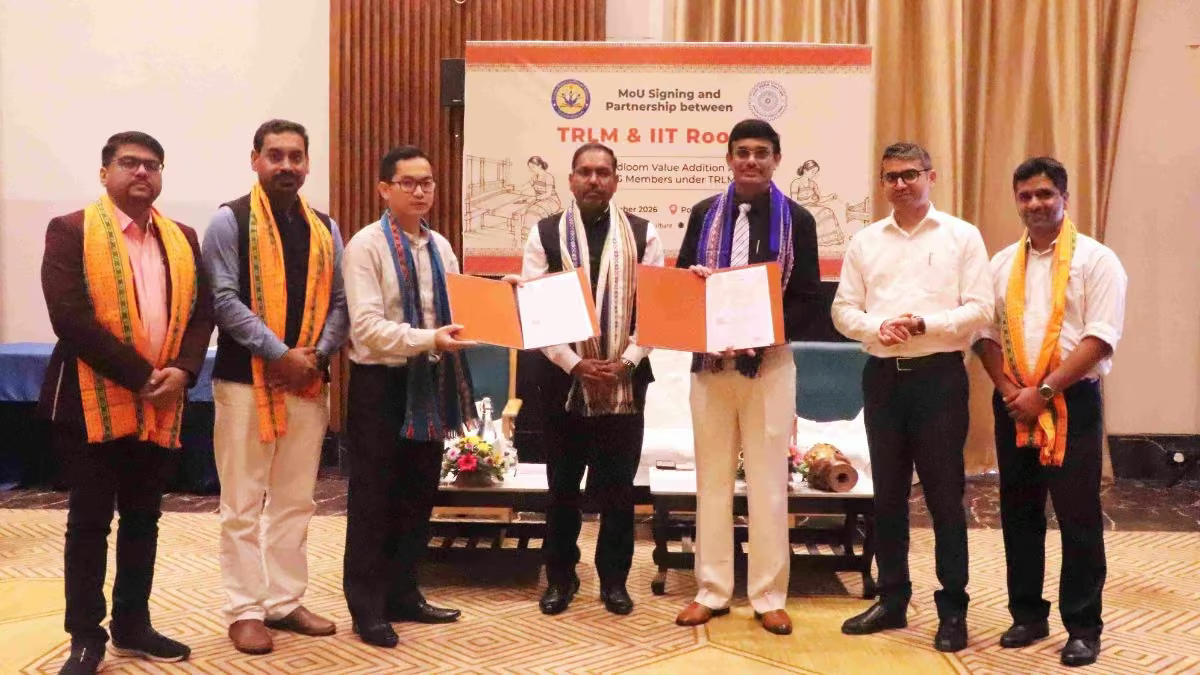
The Indian Institute of Technology Roorkee (IIT Roorkee) signed a Memorandum of Understanding (MoU) with the Tripura Rural Livelihood Mission (TRLM) for rejuvenation of the handloom sector in Tripura on 12 October 2026.
In order to empower 500 female self-help group (SHG) weavers in the districts of North Tripura, Unakoti, and Dhalai, a three-year cooperation was formed. The project transforms traditional craftsmanship into a scalable, market-driven livelihood ecosystem by combining design innovation, skill development, and technology.
The signing ceremony was attended by A. K. Sharma, head of the Department of Design at IIT Roorkee, and Abhishek Singh, secretary of the Rural Development Department, Government of Tripura. TRLM's CEO Tarit Kanti Chakma and IIT Roorkee's Department of Design's Bibhuti Ranjan Bhattacharjya signed the contract on the company's behalf.
Also read | Assam government asks universities to prepare higher education action plans under NEP 2020
Enhancing rural livelihoods through institutional partnerships
Speaking to the audience, Singh emphasised the significance of expanding research outside the lab and bringing it into the community to tackle real-world problems. He also said that the importance of "lab-to-field translational research to address real-world challenges and contribute meaningfully to societal development."
The institute's emphasis on community involvement for sustainable rural development was highlighted by Sharma. "The potential of design, technology, and interdisciplinary knowledge to contribute to sustainable rural development and livelihood enhancement," he noted.
According to Chakma, this collaboration can enhance institutional cooperation "to create new opportunities and improve livelihoods at the grassroots level." TRLM authorities from the district as well as faculty members Sourav Arora and Kalpak K. Kulkarni attended the ceremony.
By combining traditional talents with modern business methods and digital market access, the alliance seeks to boost productivity and product value and build an effective women-led handloom network in the state.