MUHS VC considers online lectures, blockchain technology, annual PhD exams for Maharashtra medical colleges
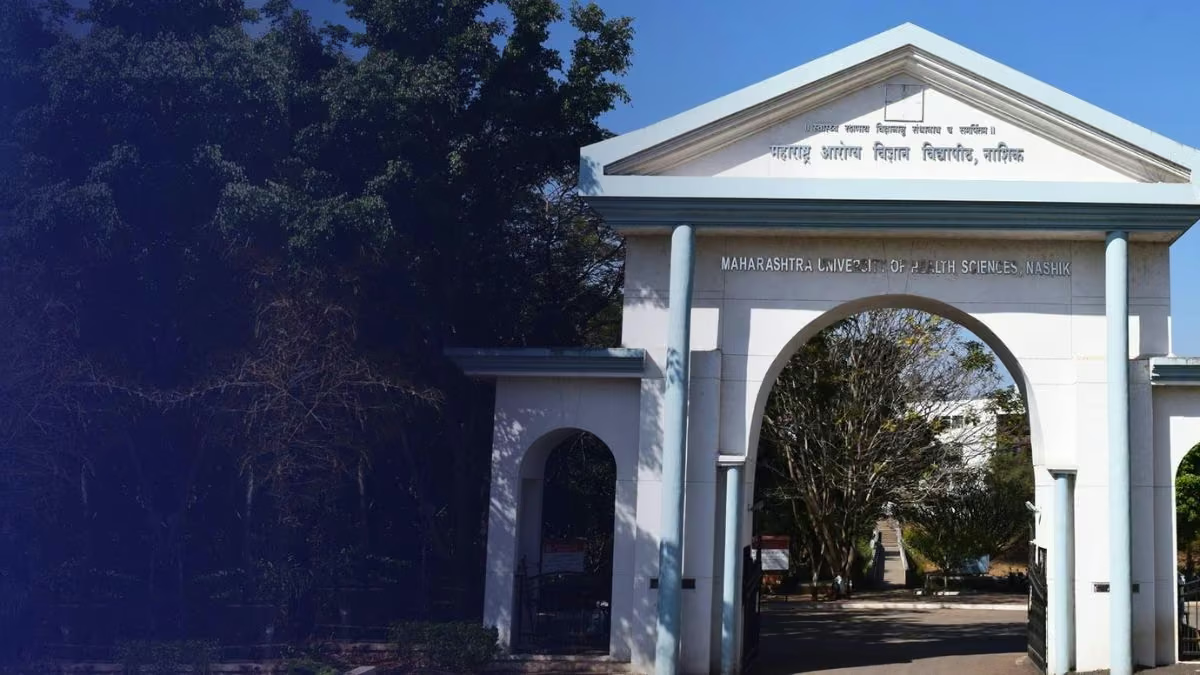
The Maharashtra University of Health Sciences (MUHS), Nashik, is considering technology-driven measures to address faculty shortages at newer medical colleges and make its examination system robust.
MUHS is exploring virtual classrooms, where subject-matter experts can deliver live lectures remotely. They can also use blockchain technology to improve exam security and thereby prevent paper leaks, Musab Qazi reports.
Venkat Gite, MUHS vice chancellor (VC), said virtual teaching can provide a temporary solution for the shortage of faculty at recently founded government medical colleges. Under the proposed model, lectures delivered could be recorded and streamed live to students from other colleges. Local tutors could also facilitate interaction between students and remote faculty.
The initiatives were outlined by Venkat Gite, who was appointed the new vice chancellor on July 29, 2026. The university had been without a full-time vice chancellor for more than nine months following the completion of Madhuri Kanitkar’s tenure in October.
MUHS explores virtual classes for medical education
The VC stressed that virtual teaching will primarily cover the theoretical component of medical education and not replace hands-on clinical training. He suggested using multiple-choice questions to assess students’ understanding while also helping them prepare for postgraduate medical entrance examinations, as reported by Musab Qazi.
Gite said the proposal shall be submitted to the state government for approval. For a long-term solution to the faculty shortage, he suggested the government increase spending on healthcare and involve medical postgraduates to teach as part of their service obligations.
MUHS is also planning for a centralised grievance redressal system and a 24x7 helpline for students. Each affiliated college and university department will designate a nodal person to handle complaints, including those related to ragging.
The university also plans to strengthen student welfare measures such as anti-discrimination mechanisms, mentor-mentee programmes, sports activities and support for disadvantaged students.
Secure annual PhD entrance exams planned
Maharashtra University of Health Sciences will consider blockchain-based examinations, along with encryption and decryption systems, to increase security and reduce the risk of question paper leaks.
Gite also proposed conducting the PhD entrance exam annually rather than once every two years. This will allow candidates to get doctoral admissions without extended waiting periods.
Musab Qazi reported that the VC also added that the university has plans to improve its position in national and international rankings over the next five years. Moreover, MUHS is also looking at collaborations with other universities or institutions to start programmes in sports physiology, alongside developing new equipment, thereby exploring additional revenue streams.
Additionally, commenting on the debate over the registration of homeopathic practitioners with the Maharashtra Medical Council, Gite said he opposes “mixopathy” but supports cooperation between different medicine systems, stressing that one should not perform the work of another.