NCVET to get skill-development research division, plans skilling in sports, languages, geriatric care
The National Council for Vocational Education and Training (NCVET) will establish a dedicated research division to serve as a policy think-tank on skill development. The division will undertake research on “labour market trends, qualification relevance, system performance, and policy innovation”, says a statement from the ministry of skill development and entrepreneurship (MSDE).
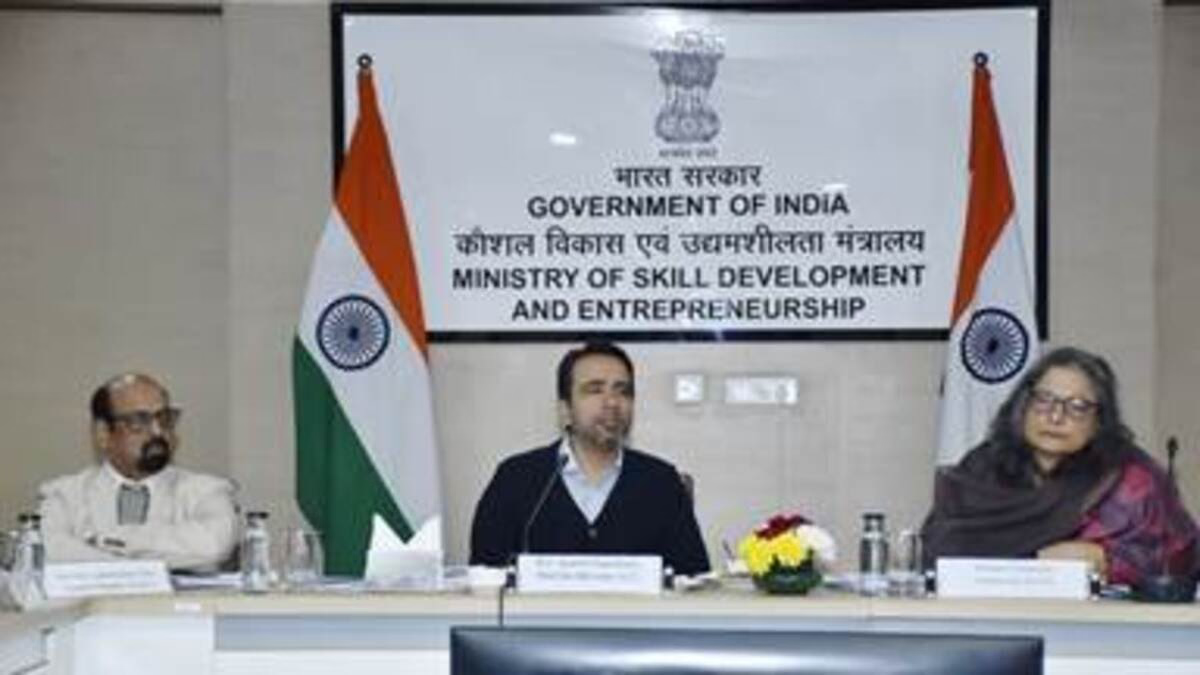
The decision to set up the research division was taken at the first general body meeting of the NCVET(India's overarching regulator for vocational education and training), chaired by the minister of state for skill development on Monday, January 12. The general body has approved a series of policy decisions aimed at reshaping India’s skilling architecture, with a focus on research-led regulation, inclusion and alignment with future workforce needs.
The research division will enable evidence-based policymaking and ensure that skilling regulations are responsive to changing industry demands and employment patterns, read the official release.
Expansion of skilling
The NCVET’s general body also discussed expanding skilling in fields such as sports, languages and geriatric care.
The meeting saw discussion on “establishing equivalency pathways for languages such as English, Japanese, and German to enhance international workforce mobility”, says MSDE’s statement. The body also discussed developing a “national strategy to build a skilled workforce for India’s rapidly growing elderly population”.
National skill development initiatives
The general body deliberated on several national initiatives designed to align skilling with emerging technologies and sectors. These included SOAR (Skilling for AI Readiness), a flagship initiative to democratise AI learning, “which has already recorded more than 1.74 lakh enrolments” according to the ministry’s statement on the meeting. Members discussed its role in addressing skill gaps in AI-driven industries.
Project Punah Sthapan was also reviewed, focusing on facilitating the transition of defence personnel into the civilian workforce.
Under the programme, 20 Tri-Services institutions have been recognised as “dual awarding bodies”, enabling defence-trained personnel to receive nationally recognised civilian qualifications.
The Semiconductor Workforce Strategy (2025) was another key agenda item. The roadmap identifies skilling requirements across the semiconductor value chain, supporting India’s goal of emerging as a global electronics manufacturing hub.
At present, NCVET regulates 161 Awarding Bodies and 68 Assessment Agencies across the country.