
 Job Opportunities
Thapar Institute, Imperial College London to develop AI models for air pollution research
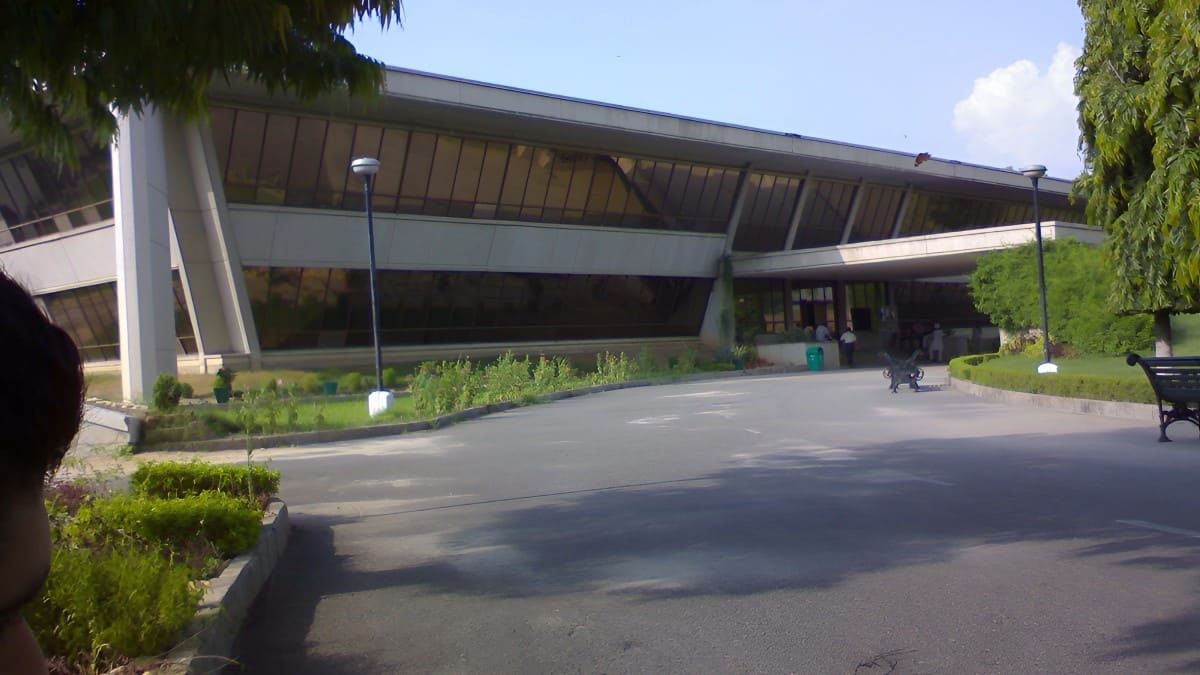
Thapar Institute of Engineering and Technology (TIET) has partnered with Imperial College London to advance research in artificial intelligence (AI). The collaboration will use AI tools to better understand and analyse air pollution patterns across Northern India.
The collaboration was highlighted at the India AI Impact Summit 2026 held in Patiala on April 27. Under this partnership, researchers will develop advanced AI models based on physics.
“Unlike traditional monitoring systems, these AI models aim to create a ‘digital twin’ of the region’s atmosphere. This will help simulate and predict pollution patterns more accurately and improve understanding of air quality trends,” the Thapar Institute said.
According to the institute, the project brings together global experts and local researchers to build tools that can be used at scale. These tools will help policymakers make better decisions on climate and environmental issues.
AI models to improve pollution prediction
Padmakumar Nair, vice chancellor of TIET, said that international partnerships are important for improving research and innovation. He added that AI is not just a new technology, but also a way for universities around the world to work together.
He further noted that universities can create useful solutions by sharing knowledge, ideas, and different perspectives across countries.
Its participation in the summit reflects its growing role in global research discussions, especially in the field of responsible AI development, the institute said.
TIET has also partnered with several international universities, including Trinity College Dublin and the University of Groningen. In addition, it has industry collaborations such as the AI School developed with NVIDIA.
Through such initiatives, the institute aims to expand research in artificial intelligence, climate science, and digital technologies, while contributing to solutions for global challenges, the statement said.
Academia360 Daily
Get key education news, research, and job opportunities in your inbox.
More Stories
From farm work at 10 to Padma Shri at 70: Mahendra Nath Roy’s journey to become world’s top 2% scientist
Jamia Millia Islamia student’s project can help Delhi’s unauthorised colonies ride out a heat wave
ANRF PAIR Programme gives Rs 100 crore to just 7 hub-spoke networks, rest get Rs 2 crore grants
IIT Madras has incubated 112 startups, filed 431 patents in one year, continues innovation push
research,jobs and more — delivered to your inbox every morning.
Get our Daily Newsletter to stay updated on education policies, research, jobs & more.