University of Hyderabad researchers get Rs 4.98 crore ICMR grant to develop AI-powered PCOS blood test
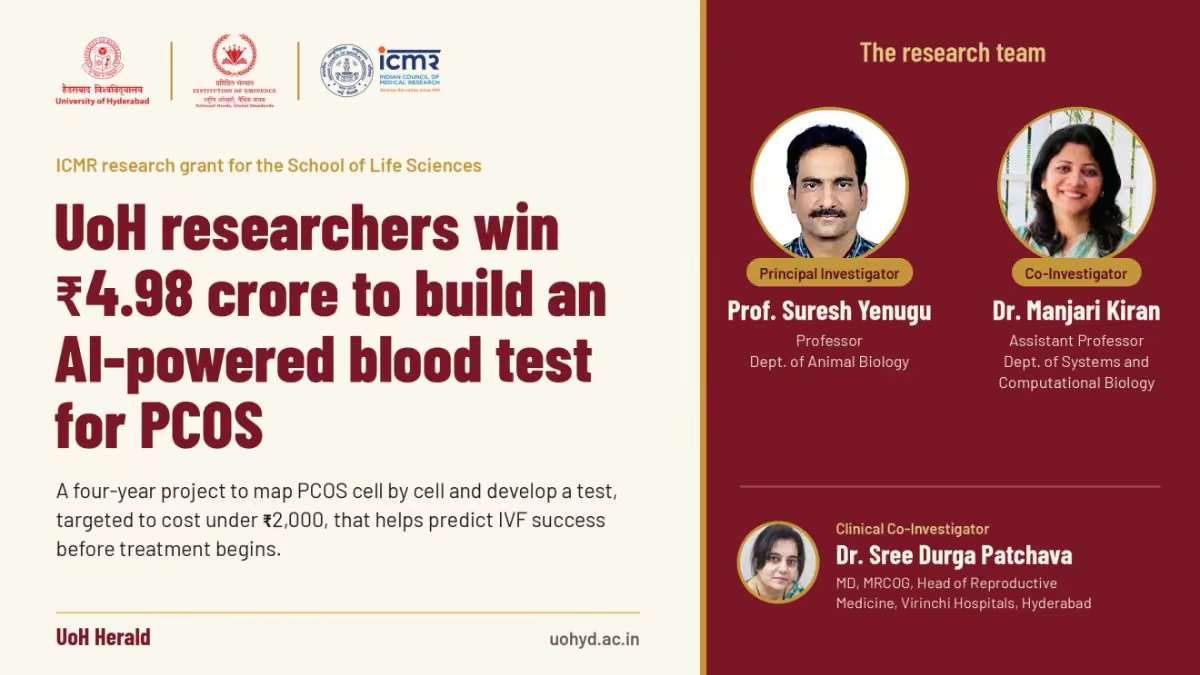
The researchers at the University of Hyderabad (UoH) have received a Rs 4.98 crore research grant from the Indian Council of Medical Research (ICMR) so that they can develop an affordable, artificial intelligence (AI) powered non-invasive blood test for Polycystic Ovary Syndrome (PCOS).
A research team from UoH’s School of Life Sciences will lead the project, which will have a duration of four years. The research study will combine genomics and artificial intelligence (AI) to improve the diagnosis and treatment of PCOS.
The grant was awarded under the ICMR Intermediate Extramural Grants, also known as the ICMR Nischayak Anveshan Extramural Grants 2026 call. The project has received approval from ICMR on September 1, 2026, while work started on September 16. The first-year budget allocated under the grant is Rs 1.52 crore.
Also Read | AICTE announces Rs 245 crore fellowship programme to boost doctoral research
UoH research on affordable, non-invasive PCOS diagnosis
The research team is being headed by Suresh Yenugu from the Department of Animal Biology, School of Life Sciences, UoH. Manjari Kiran from the Department of Systems and Computational Biology is the co-investigator, while the clinical co-investigator is Sree Durga Patchava, head of Reproductive Medicine at Virinchi Hospitals, Hyderabad.
The project will study molecular changes in blood cells and use machine learning to find out patterns linked to ovarian problems in women with PCOS. The researchers will also create a blood-based test that could reduce the requirement for invasive assessments.
The new diagnostic platform could cost less than Rs 2,000. It will help put PCOS patients into different molecular groups and help doctors understand how individual patients respond to fertility treatments, including in-vitro fertilisation (IVF).
Also Read | CSIR invites research proposals from retired scientists under Emeritus scheme
India-specific PCOS genomic resource
The researchers will also develop what UoH shares as India’s first single-cell transcriptomic atlas of PCOS. The resource will offer genomic data specific to Indian patients only and could support future research into PCOS treatments and drug development.
The project will also support personalised reproductive care by helping doctors study the molecular differences among patients. It will reduce repeated and costly fertility treatments by offering information that could be of help to treatment decisions.
The grant will also boost UoH’s research infrastructure with the addition of a high-performance GPU-based AI workstation and a real-time polymerase chain reaction (PCR) system. The project will also create research positions for young scientists and will contribute to publications and intellectual property development.