BITS Pilani students develop AI copilot to support scientific research
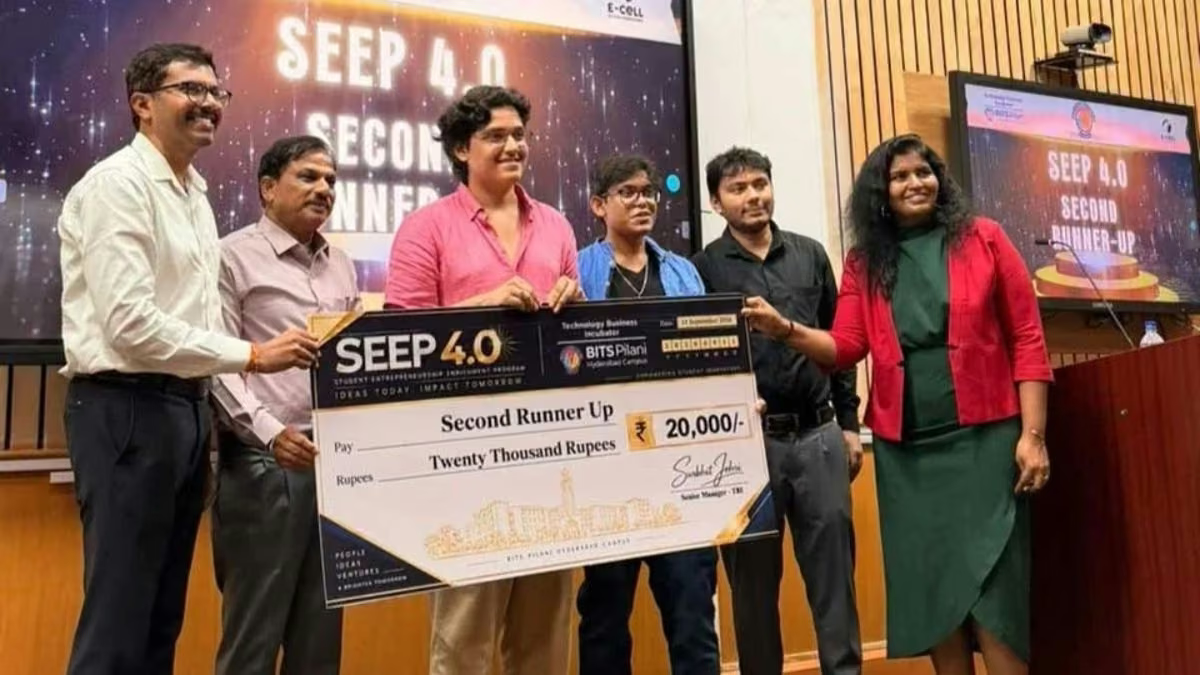
Two students from BITS Pilani, Hyderabad campus have developed an artificial intelligence (AI) platform to enable academics to explore scientific studies, assess the challenges and identify suitable steps for further research. The AI platform aims to help with various stages of scientific discovery, and is designed by the student-led startup NovAtom Labs.
The AI platform ‘research copilot’, has been used and assessed by researchers from international institutions including ETH Zurich, Georgia Institute of Technology (Georgia Tech) and University of Toronto.
In India, the platform has been shown to the researchers and engineers at the Semiconductor Laboratory (SCL), Mohali. It was demonstrated in the NovAtom Labs, where it is now collaborating on the application of its technology to semiconductor research problems.
Also read | Ladakh’s first medical college to open in 2027-28, recruitment for 103 posts begins
How the ‘research copilot’ works
‘NovAtom Labs’ was founded by the two students, Arnav Kulshreshtha and Sattwik Das, who are working on a platform to connect the existing scientific knowledge with experiments and computational results for researchers. Researchers across disciplines which include materials science, biology, engineering and semiconductor technology at the institute are also using the AI platform.
Research copilot is designed to help users explore scientific literature, find the relevant parameters, constraints, and evaluate previous experimental or computational outcomes. Kulshreshtha and Das want to build AI systems that can assist researchers at every stage of the discovery process, not just AI tools that majorly fetch information or write texts.
The technology can also be used in various fields like, chemistry, biotechnology, pharmaceuticals, energy and advanced manufacturing. In these fields, research often requires testing many possibilities and experimental conditions.
Explaining their long term vision, Kulshreshtha and Das, founders of NovAtom Labs, said, “we aim to develop self-driving research laboratories in India. This will help create a research environment where AI systems can work alongside scientists to analyse knowledge, design and prioritise experiments, learn from experimental outcomes, and continuously help determine the next direction for research”.
The startup grew out of an initiative the two students had been working on through independent AI projects and interactions with the researchers. Its development is part of efforts to build AI-based scientific research infrastructure from India.