NTA invites educators, researchers, academics to join subject-matter expert panel
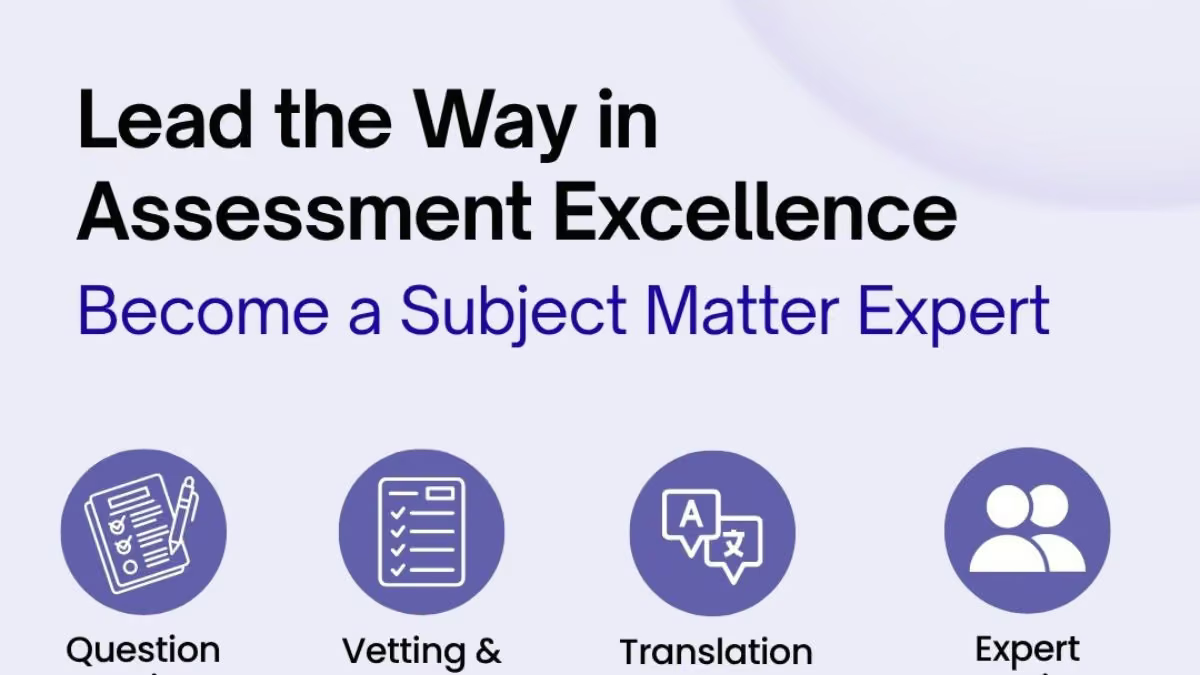
The National Testing Agency (NTA) has started inviting Expressions of Interest (EoI) to be empanelled as subject-matter experts (SME). The NTA is accepting invitations from experienced educators, researchers, and academics.
These experts will be selected and added to an official panel, or they may be asked by the NTA to participate in some specific examination-related work. Interested candidates can submit their applications online through the official NTA website by October 9, 2026.
The empanelment will boost the academic and assessment processes that are followed in national-level examinations conducted by the agency. Selected experts can contribute to different stages of examination, including development, making questions, reviewing, moderation and translation.
Also Read | 6 IIT Bombay faculty members named INSA fellows for research in science, engineering
Subject-matter expert panel
The SME panel will support NTA in developing questions that test higher-order thinking of the candidates. These questions will also check the application of concepts and understanding of the prescribed syllabus. Experts will also be checking and vetting test items to check their conceptual accuracy, clarity and appropriate level of difficulty. The NTA will also hire SME experts to review and standardise examination content.
Another area of contribution for the SME experts will be translation and transadaptation of examination material into different regional languages. Experts involved in this process must ensure that translated content remains accurate, clear and appropriate in every possible context.
This opportunity is for serving and retired faculty members, professors, school educators and other domain specialists who have shown a certain level of expertise in their respective subjects. The empanelment will allow subject experts to act as the quality assurance agents of national-level exam content.
According to Press Trust of India reports, an official said, "The key areas of contribution include crafting higher-order thinking, application-based, and syllabus-aligned questions; scrutinising test items for conceptual accuracy, clarity and difficulty calibration; ensuring standardisation, neutrality, and adherence to exam blueprints and providing precise, culturally and linguistically sound translations across multiple regional languages."