University of Hyderabad study identifies gene that could support sustainable farming
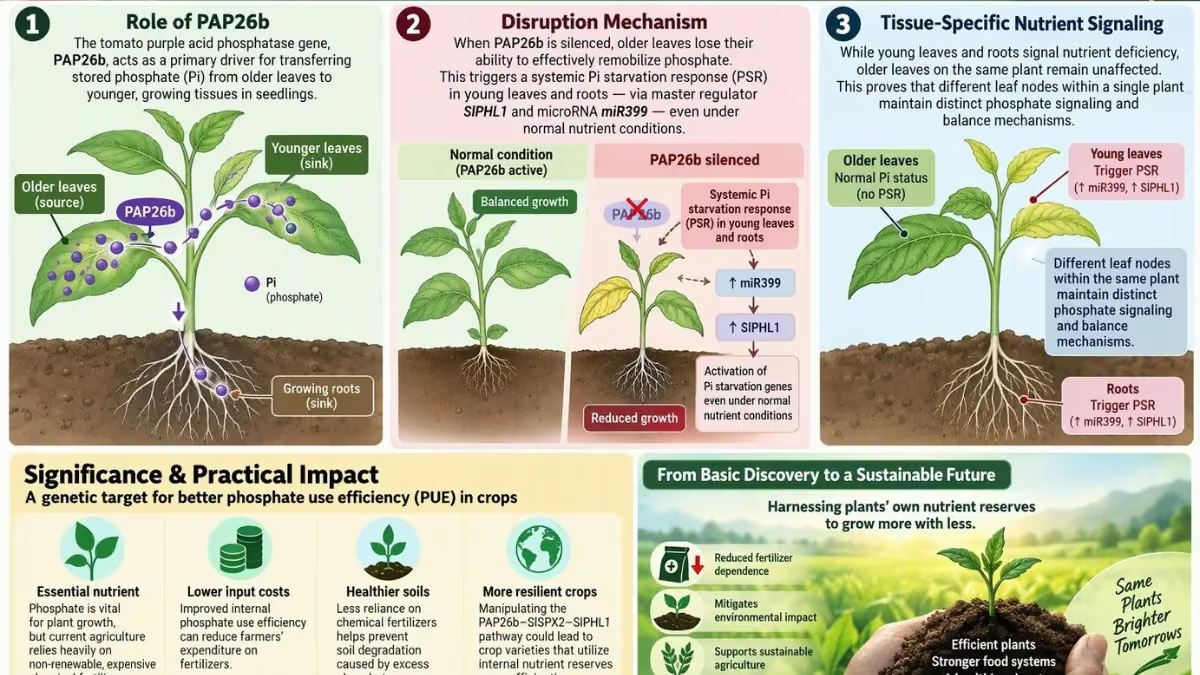
Researchers at the University of Hyderabad (UoH) have recently reported that they have identified a gene that helps tomato plants regulate and move phosphate, which is an important nutrient required for plant growth. The findings could help researchers understand how plants manage phosphate and find ways to improve how crops use the nutrient.
An announcement by UoH in a recent post on X says, “Led by Prof. Rahul Kumar at The Tomato Lab (Department of Plant Sciences), the team—including Abhishek Roychowdhury—cracked the code on how tomato plants manage internal nutrient reserves.”
The UoH study was published in the Journal of Experimental Botany. This identified SlPAP26b as an important gene that was involved in moving phosphate from older leaves to younger, growing parts of tomato plants.
Also Read | MLRITM Hyderabad, NITTTR Chennai partner for faculty training, research, academic development
UoH study finds how tomato plants move phosphate
In the research study, it was found that phosphate is an essential nutrient for plants, but crops do not always use it to the fullest. Farmers usually depend on phosphate-based fertilisers for crop growth. Understanding how plants store, reuse and move phosphate could help researchers develop crops.
The UoH researchers have also studied tomato seedlings under phosphate-deficient conditions and found that SlPAP26b is more active in leaves, roots and ageing leaves. The researchers then studied what happens when the gene is made less active.
Researchers found that plants with reduced SlPAP26b activity showed slower shoot growth and smaller levels of intracellular acid phosphatase. Finally, younger parts of the plants showed that they had less phosphate even when phosphate was available.
Also Read | ANRF invites proposals from SC, ST researchers under Inclusivity Research Grant scheme
Gene linked to phosphate-starvation response
“By mapping how the SlSPX2–SlPHL1 pathway controls this nutrient flow, the UoH team has provided a precise genetic target to boost Internal Phosphate Use Efficiency (PUE),” reads the post on X. The younger leaves and roots acted as if they did not have sufficient phosphate, even though the plants had enough.
The researchers said their findings are giving new information on how different parts of a plant regulate phosphate availability. The study could also be useful for future research on improving phosphate use efficiency (PUE) and understanding how plants will respond to changes in the availability of the nutrient.