NIT Rourkela turns jackfruit peel into low-cost material to remove fluoride from drinking water
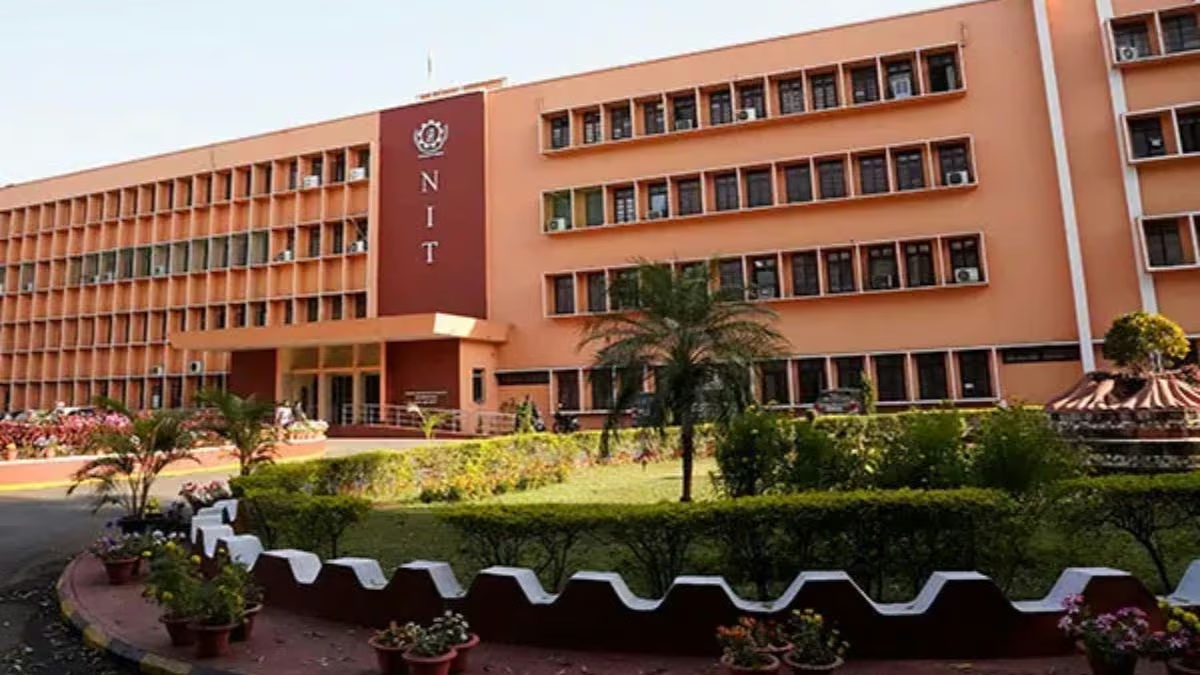
Researchers at National Institute of Technology (NIT) Rourkela have patented a low-cost material derived from jackfruit peel to extract excess fluoride from contaminated groundwater. The innovation addresses a critical public health challenge affecting several drinking water sources across India.
The research team, led by Susmita Mishra, professor at the department of chemical engineering, and research graduate Pratima Minz, converted agricultural waste into zirconium-modified activated carbon. The technology offers an eco-friendly alternative to conventional water treatment methods.
In laboratory tests, the material demonstrated high efficiency, removing over 90% to 97% of fluoride within 10 to 20 minutes at concentrations of 1–5 milligrams per litre. The patented process presents potential applications for community-level water purification systems in fluoride-affected rural areas.
Water purification technology
Excessive fluoride in drinking water can “cause dental and skeletal fluorosis” in children and adults, the World Health Organisation (WHO) report says. Conventional treatment techniques like reverse osmosis "discard a large amount of water" while removing beneficial minerals like calcium and magnesium. In addition, processes like ion exchange and activated alumina “use harsh chemicals” which are non eco-friendly.
To overcome these operational drawbacks, researchers repurposed discarded jackfruit peel into activated carbon. Mishra noted that the key idea behind the innovation "is to use an agricultural waste material as a resource for water purification." She added that modifying the carbon with zirconium helped "improve its ability to capture fluoride from water."
Also read | IIT Madras unveils 3D Stroke Atlas, plans to map 100+ human brains
Prototype field deployment
After validation at the laboratory level, the research has achieved Technology Readiness Level 4 (TRL 4). With data on electricity and chemicals, the team estimated the synthesis cost of the material to be about Rs 37 per gram, providing a sustainable waste-to-resource approach to decentralised water treatment infrastructure.
Secured under an official patent application filed on August 25, 2025, the project now moves toward scaled testing. Mishra explained that in the long term, the innovation "could contribute to water treatment solutions for communities in fluoride-affected regions, subject to further testing and validation." The team intends to build a physical prototype to evaluate operating costs and long-term field performance.