IIT Delhi, ISRO discuss research collaboration opportunities in solar technology, biomechanics
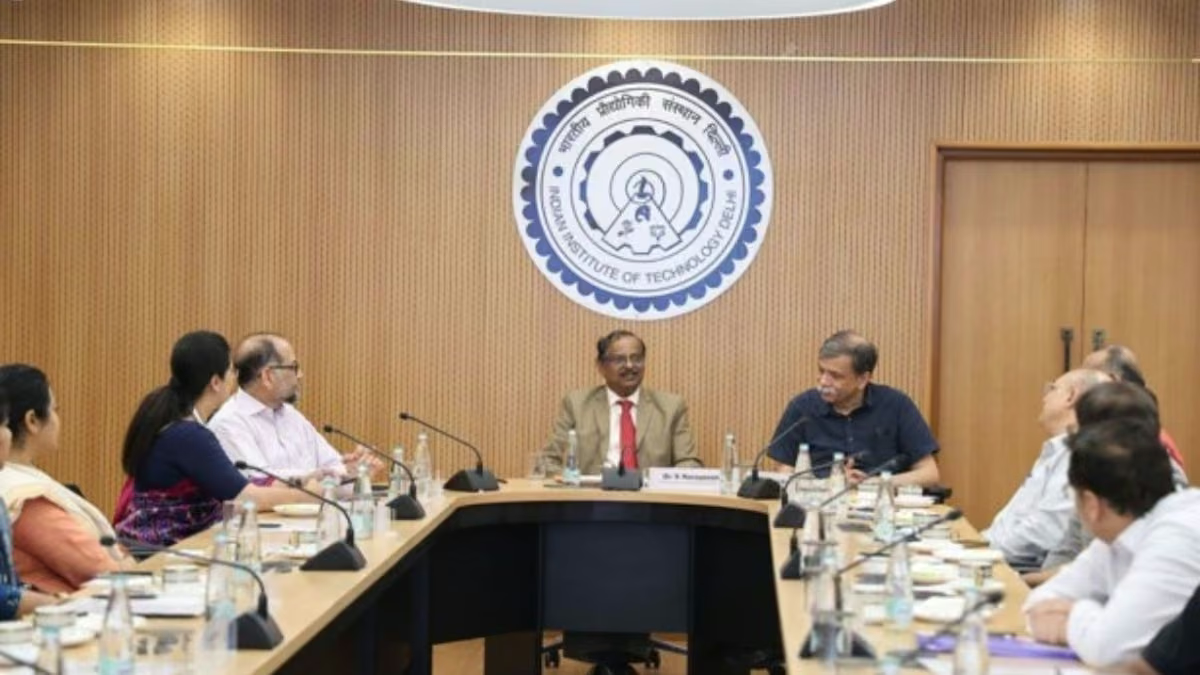
As India expands its space programme, the Indian Institute of Technology Delhi (IIT Delhi) and the Indian Space Research Organisation (ISRO) are exploring new areas of research collaboration. These research areas include solar panel technologies and biomechanics.
ISRO Chairman and Secretary, Department of Space, V Narayanan, discussed the possible areas of collaboration with the faculty of IIT Delhi during his visit to the institute. Narayanan also delivered a lecture at IIT Delhi on ‘India’s Space Programme: The Challenges and Way Forward’ on September 23, 2026.
The focus of the event was to identify new areas where research could support future space missions. He also spoke about India's space programme, how it is being developed and the missions planned in the coming ten years.
Also Read | IIT Delhi researchers develop India’s first working micro-GPU for local graphics systems
IIT Delhi, ISRO discuss new research areas
Narayanan, during his interaction with faculty, had discussions involving areas such as solar technologies and biomechanics. IIT Delhi already has researchers and expertise in areas like solar panels, mechanical engineering and biomedical science, and this could be helpful for developing technologies needed for space missions.
While reflecting on the significance of the space programme for the nation, Rangan Banerjee, Director of IIT Delhi, said, "Space is one of the few areas where we have created indigenous technology that is globally competitive, and it serves as an inspiration for all of us.”
Narayanan also highlighted India's progress in building space technologies like cryogenic propulsion systems. He said India had already developed the technology independently after it was denied access to it in the early 1990s.
Also Read | BHU gets Rs 15 crore ICMR funding for 6 biomedical research projects
Gaganyaan, space station among future missions
Narayanan also explained about many major projects that ISRO is planning. These major projects planned by ISRO include the Gaganyaan human spaceflight programme, Chandrayaan-4, a Venus mission and the Bharatiya Antariksh Station.
The first module of the Bharatiya Antariksh Station has received approval from the government, and the first launch is planned by 2028. Narayanan during the event also said that India is working towards building a crewed lunar mission by 2040.
On Chandrayaan-3, Narayanan said, "23 August 2023 was a historic day for India. While only three countries had previously achieved a successful soft landing on the Moon, India became the fourth and the first to successfully land in the lunar south polar region.”